
Tummy Tuck on Long Island
If you’ve reached a point where diet and exercise aren’t reshaping your midsection the way you’d hoped, you’re not alone, and a tummy tuck on Long Island may be the next step worth exploring. Whether the loose skin and stubborn abdominal contour are the result of pregnancy, significant weight loss, aging, or genetics, abdominoplasty remains one of the most reliable cosmetic procedures available for restoring a firmer, flatter, and more proportionate midsection.
At his four Long Island offices, in Babylon, Garden City, Huntington Station, and Greenvale, board-certified plastic surgeon Brian A. Pinsky, MD, FACS, performs tummy tuck surgery as part of a comprehensive body contouring practice. As a partner at New York Plastic Surgical Group (formerly Long Island Plastic Surgical Group), one of the most established plastic surgery practices in the region, Dr. Pinsky combines surgical precision with a personal, consultative approach that helps patients make confident, fully informed decisions about their care.
What Is a Tummy Tuck?
A tummy tuck, known clinically as abdominoplasty, is a surgical procedure that removes excess skin and fat from the lower abdomen and tightens the underlying abdominal muscles. The result is a smoother, firmer, more contoured midsection that diet and exercise alone often cannot produce, particularly after pregnancy, major weight loss, or significant changes to the abdominal wall.
It is important to understand what a tummy tuck is and what it isn’t. Abdominoplasty is a body-contouring procedure, not a weight-loss procedure. It is designed for patients who are at or near a stable goal weight and whose remaining concern is the loose skin, fat, or muscle separation that exercise can no longer address. For patients carrying significant excess weight, Dr. Pinsky and his team will discuss the appropriate sequence of care, which may include weight stabilization before surgery is considered.
Who Is a Good Candidate for a Tummy Tuck on Long Island?
Good candidates for abdominoplasty share several characteristics. During your consultation, Dr. Pinsky will perform a detailed medical history and physical examination to determine whether a tummy tuck is the right procedure for your goals. In general, patients tend to be well-suited for surgery when they:
- Are at or near a stable, healthy weight
- Have loose, stretched, or hanging skin across the lower abdomen.
- Have weakened or separated abdominal muscles (diastasis recti), often after pregnancy
- Are generally in good overall health, without conditions that would make surgery unsafe
- Do not smoke or are willing to stop well in advance of surgery.
- Have realistic expectations about what surgery can and cannot achieve.
- Are finished having children, or do you not plan future pregnancies (since pregnancy can alter results)

There is no single “right” age or background for a tummy tuck. Dr. Pinsky’s patients include mothers seeking to restore their pre-pregnancy figure, men and women who have lost significant weight through bariatric surgery or sustained lifestyle change, and patients whose abdominal contour has shifted with age or genetics, despite consistent diet and exercise.
Common Reasons Patients Consider Abdominoplasty
The most frequent reasons Long Island patients schedule a tummy tuck consultation with Dr. Pinsky include:
Pregnancy and Postpartum Changes. Pregnancy stretches the abdominal skin and muscles, and these tissues do not always return to their pre-pregnancy state, regardless of how diligently a patient exercises afterward. Diastasis recti, the separation of the vertical abdominal muscles, is particularly common and cannot be corrected through training. A tummy tuck addresses both the loose skin and the muscle separation in a single procedure.
Significant Weight Loss. Patients who have lost a substantial amount of weight, whether through bariatric surgery, lifestyle change, or medications such as GLP-1 agonists, are often left with loose, hanging skin that can cause physical discomfort, hygiene challenges, and clothing fit issues, in addition to cosmetic concerns. Abdominoplasty removes that excess tissue and restores a tighter contour.
Aging and Loss of Skin Elasticity. With time, the skin and connective tissue across the abdomen lose elasticity, and the body tends to redistribute fat toward the trunk. A tummy tuck can restore a more youthful abdominal contour when topical treatments and lifestyle measures have reached their limits.
Genetics. Some patients simply inherit a tendency toward a protruding lower abdomen, regardless of fitness level or body weight. When diet and exercise have plateaued, abdominoplasty offers a structural correction that other approaches cannot.
Prior Abdominal Surgery. Previous surgeries, including liposuction, hernia repair, or cesarean delivery, can leave behind contour irregularities or loose skin that a properly designed abdominoplasty can address.
Types of Tummy Tuck Procedures
Not every patient needs the same procedure. Dr. Pinsky tailors each surgical plan to the patient’s anatomy, the amount of excess skin and fat, and the condition of the underlying muscle. Common variations include:
Full (Standard) Abdominoplasty
The most commonly performed version, a full tummy tuck, addresses the entire lower abdomen. A low transverse incision is made along the bikini line; the abdominal muscles are tightened with internal sutures; excess skin and fat are removed; and the belly button is repositioned. This is the appropriate choice for most patients with significant loose skin and muscle laxity.
Mini Tummy Tuck
For patients whose concerns are limited to the area below the belly button, with mild skin laxity and minimal muscle separation, a mini tummy tuck uses a shorter incision and does not require repositioning the navel. Recovery is generally faster, but the procedure addresses a smaller area than a full abdominoplasty.
Extended Abdominoplasty
When loose skin extends beyond the abdomen to the flanks or lower back, often after major weight loss, an extended tummy tuck uses a longer incision to address the full circumference of the lower torso.
Tummy Tuck With Liposuction
Liposuction of the flanks or surrounding areas is frequently combined with abdominoplasty to refine the overall contour and produce a more harmonious result. Dr. Pinsky will discuss whether this combination is appropriate for your specific goals.
Mommy Makeover
Many patients combine a tummy tuck with breast surgery, such as breast augmentation, breast lift, or breast reduction, in a single procedure known as a mommy makeover. Combining procedures can reduce overall recovery time compared with staging them separately, when the patient is a suitable candidate for a longer surgery.
What to Expect: The Tummy Tuck Procedure With Dr. Pinsky
Dr. Pinsky’s approach prioritizes patient education and careful surgical planning. Most patients are seen at least twice before surgery to ensure that all questions are answered and the surgical plan is fully understood. A typical abdominoplasty includes the following steps:
- Anesthesia. Abdominoplasty is performed under general anesthesia. Dr. Pinsky works exclusively with board-certified anesthesiologists in accredited hospital or ambulatory surgery settings.
- Incision. A low transverse incision is designed across the lower abdomen, positioned so that the resulting scar sits within the underwear line and is not visible in low-cut clothing or a bathing suit.
- Muscle Repair. Loose or separated abdominal muscles are tightened in the midline using internal sutures. This step is one of the defining elements of abdominoplasty and is what produces a true flattening of the abdominal wall.
- Tissue Removal and Contouring. Excess lower abdominal skin and fat are removed. Liposuction is often added to refine the flanks and the upper abdominal skin flap.
- Closure. Incisions are closed using a combination of sutures and skin adhesives that support healing and minimize scarring over time.
- Recovery Preparation. Dr. Pinsky prescribes appropriate medications, provides detailed home care instructions, and schedules follow-up visits to monitor your healing.
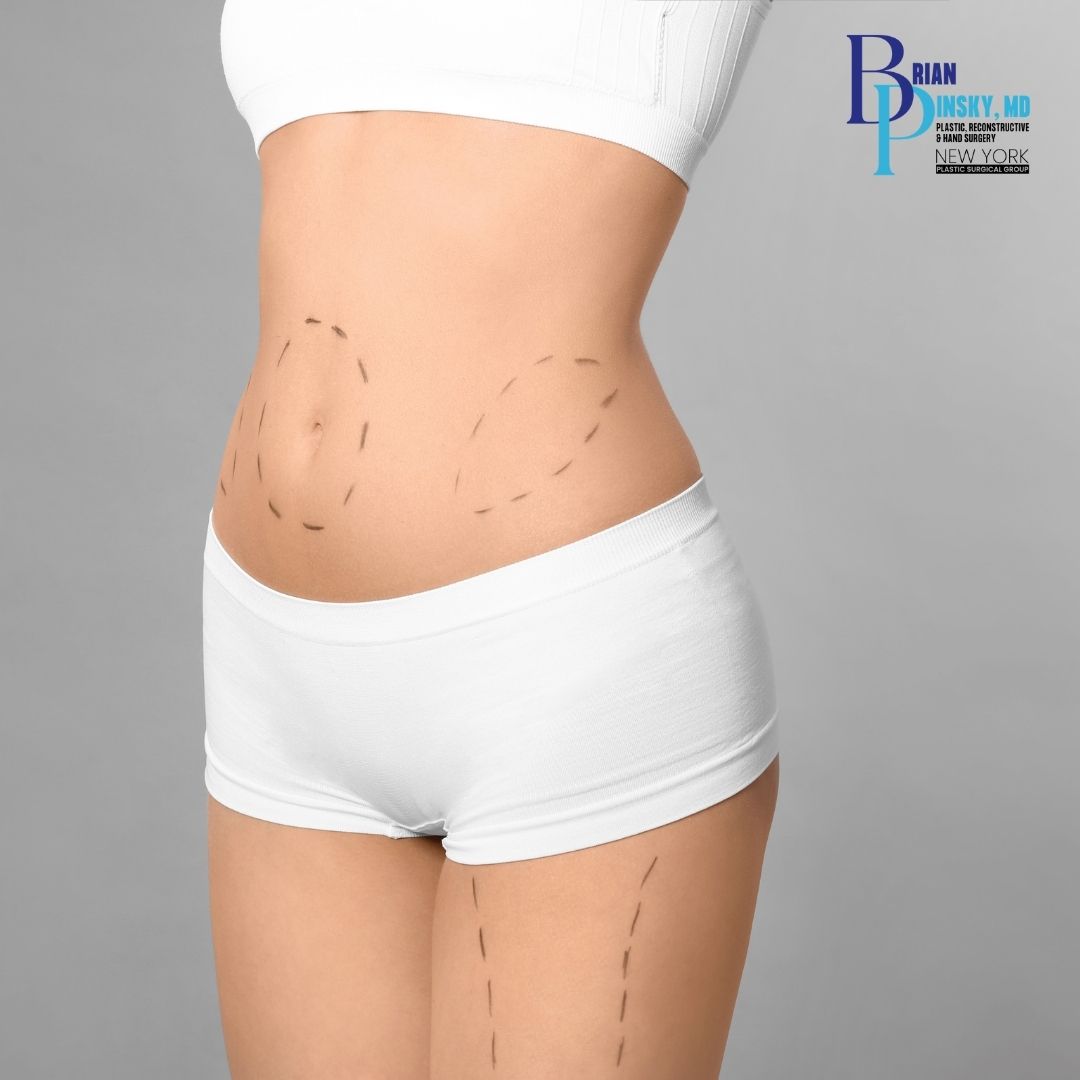
Surgery is performed on an outpatient or short-stay basis, depending on the procedure’s scope and the patient’s overall health.
Tummy Tuck Recovery on Long Island
Recovery from abdominoplasty is gradual, and Dr. Pinsky will walk you through every phase before surgery so you know exactly what to expect. General expectations include:
- First Week. Patients are encouraged to begin gentle walking on the day of surgery to reduce the risk of blood clots and lung complications. Pain is managed with prescribed medications, and most patients rest at home with help from a family member or caregiver.
- Two Weeks. Most patients return to desk-based or sedentary work within about two weeks. Patients whose work involves heavy labor or significant physical demands may need additional time.
- Six Weeks. Strenuous exercise and abdominal-targeted training are generally restricted for the first six weeks. After this point, most patients are cleared to resume all activities, including exercise.
- Three to Twelve Months. While the majority of healing occurs in the first three months, the final shape of the abdomen, the maturation of scars, and the settling of internal tissues continue over the course of six to twelve months. Dr. Pinsky will see you for follow-up appointments throughout this period.
Maintaining your results long-term depends on a stable weight and a consistent lifestyle. Significant weight gain, or a future pregnancy, can alter the results of a tummy tuck over time.
Combining a Tummy Tuck With Other Procedures
Many of Dr. Pinsky’s patients consider abdominoplasty as part of a broader body-contouring plan. Common combinations include:
- Tummy Tuck + Liposuction for refined waist and flank contouring
- Tummy Tuck + Breast Surgery (Mommy Makeover) to address pregnancy-related changes in a single recovery
- Tummy Tuck + Post-Weight-Loss Body Contouring for patients addressing loose skin in multiple areas after major weight loss
Whether a combined approach is appropriate depends on your overall health, the scope of the procedures, and the recovery you’re prepared to commit to. Dr. Pinsky will discuss the safest and most effective sequencing during your consultation.

Frequently Asked Questions
Is a tummy tuck the same as liposuction?
No. Liposuction removes fat but does not remove excess skin or tighten muscles. A tummy tuck removes both excess skin and fat and repairs separated or weakened abdominal muscles. The two procedures address different problems and are often combined for a more complete result.
How visible will the scar be?
The main tummy tuck incision is designed to sit low across the lower abdomen, within the underwear or bikini line. While every patient heals differently, the scar is positioned so that it is concealed by most underwear and swimwear. Scar appearance continues to improve over the first 6 to 12 months.
Can I have a tummy tuck if I want to have more children?
It is generally recommended that patients complete their family before having a tummy tuck, because pregnancy can stretch the skin and muscles again, altering the results. If you are considering future pregnancies, Dr. Pinsky will discuss timing and options during your consultation.
Will insurance cover my tummy tuck?
Cosmetic abdominoplasty is not typically covered by insurance. In certain reconstructive cases, such as panniculectomy for documented medical issues after major weight loss, partial coverage may apply. Dr. Pinsky’s office can help you understand what may or may not qualify.
How soon will I see results?
You will notice a flatter, more contoured abdomen as soon as the immediate swelling subsides, often within the first few weeks. However, residual swelling continues to settle over several months, and the final result is typically appreciated between six and twelve months after surgery.
Which of Dr. Pinsky's offices serves my area?
Dr. Pinsky sees patients at four Long Island locations: Babylon (Suffolk County), Huntington Station (Suffolk County), Garden City (Nassau County), and Greenvale (Nassau County). Most surgical consultations can be scheduled at the office most convenient to you.
Schedule Your Tummy Tuck Consultation on Long Island
If you’ve been considering a tummy tuck on Long Island, the most important step is a thorough, honest consultation with a board-certified plastic surgeon who will take the time to understand your goals and explain what surgery can realistically deliver. Dr. Brian Pinsky has built his practice on exactly that kind of relationship.
To schedule a consultation at one of Dr. Pinsky’s four Long Island offices, in Babylon, Garden City, Huntington Station, or Greenvale, call (631) 870-7208 or submit an online request through the contact page. Your consultation is the first step toward the smoother, firmer, and more confident midsection you’ve been working toward.